4K Streams and Low-Latency Magic: Inside the Tech Powering Trust in Live Dealer Games
4K Streams and Low-Latency Magic: Inside the Tech Powering Trust in Live Dealer Games

Live dealer games have transformed online casinos, blending the thrill of physical venues with digital convenience, yet the tech driving them—particularly 4K streams and low-latency protocols—stands as the unsung hero ensuring players trust every spin, deal, and outcome.
What's interesting is how these advancements, rolled out widely by mid-2025, have spiked engagement; data from industry trackers shows live dealer participation jumped 35% year-over-year, as players crave that authentic edge where they see the action unfold in stunning detail without delays that could spark doubts about fairness.
The Evolution of Live Dealer Tech
Providers kicked off with basic HD streams around 2015, but bandwidth limits and compression artifacts often left visuals grainy; fast-forward to today, and 4K resolution—packing four times the pixels of full HD at 3840x2160—delivers razor-sharp images of dealers' hands flipping cards or roulette wheels spinning smoothly, making remote play feel indistinguishable from Vegas floors.
Observers note that this shift coincides with global 5G rollouts, which handle the hefty data loads required; for instance, a single 4K stream at 30 frames per second demands up to 25 Mbps, yet optimized encoding squeezes it down to 10-15 Mbps without losing fidelity, allowing even mid-tier home setups to join seamlessly.
Unpacking 4K Streaming in Live Games
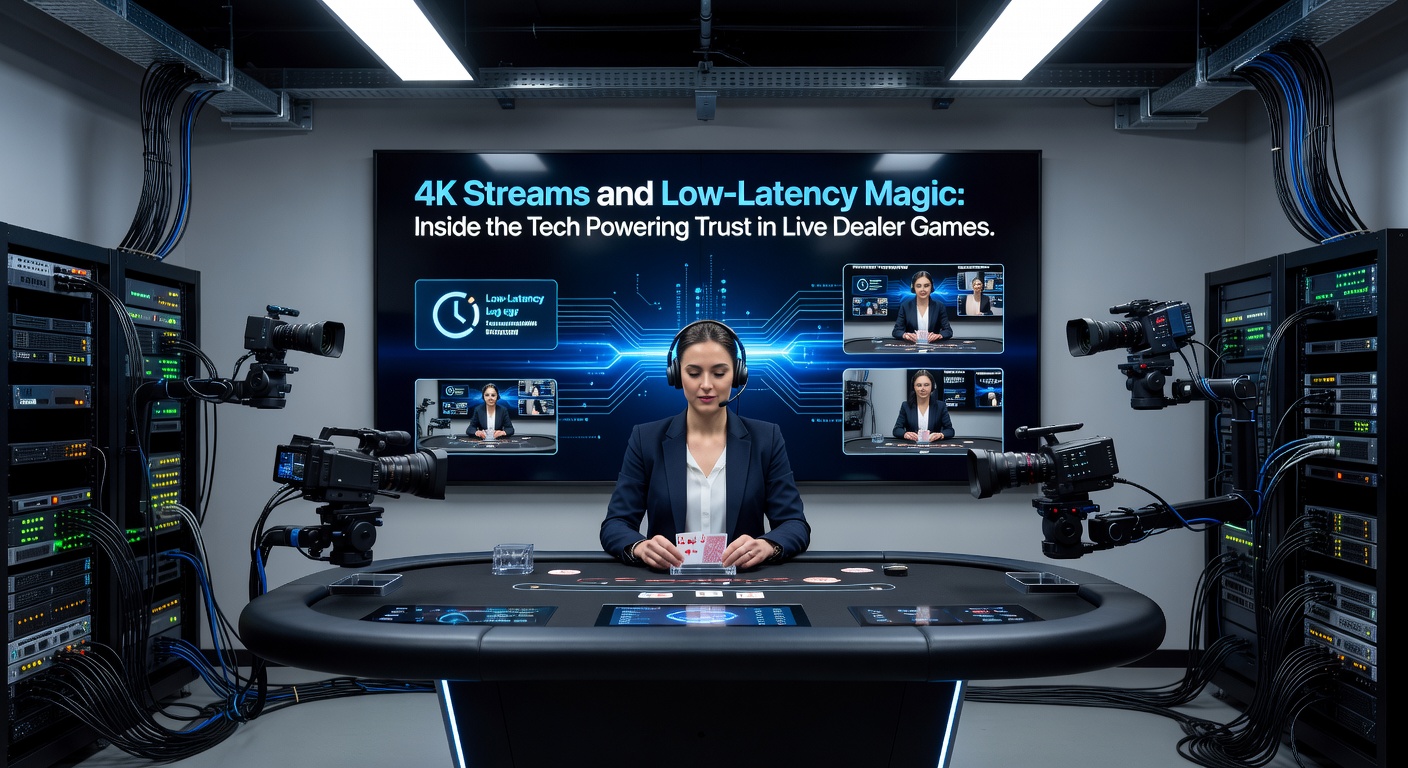
At the heart of 4K lies advanced camera arrays—often multiple 4K sensors with optical zoom and HDR capabilities—positioned around dedicated studios mimicking real casinos; these capture every angle, from overhead shots of blackjack tables to close-ups on baccarat shoes, while software stitches feeds into a cohesive broadcast.
But here's the thing: raw 4K footage balloons file sizes quickly, so encoders like AV1 or H.265 apply smart compression, preserving details like the glint on a chip stack or the spin of a die; studies from the Malta Gaming Authority highlight how such tech meets regulatory scrutiny for visual clarity, ensuring outcomes remain verifiable.
Players often discover that 4K elevates immersion; take one studio setup in Latvia, where multiple camera feeds switch dynamically based on game phase, revealing shuffles in ultra-high definition that quash any notions of hidden tricks.
The Low-Latency Revolution: Keeping It Real-Time
Low latency—delays under 100 milliseconds end-to-end—turns potential frustration into fluid interaction, where bets register almost instantly after a dealer's call; without it, even a 500ms lag could erode confidence, as players question if servers manipulate timings.
Tech wizards achieve this through protocols like WebRTC, which bypasses traditional buffering by using UDP packets over reliable streams; combined with edge computing nodes placed near users, data zips from studio to screen in fractions of seconds, even across continents.
Turns out, providers like those powering North American platforms clock latencies at 50ms average, per Nevada Gaming Control Board performance audits; this precision means a player's decision on a river card in poker lands precisely when intended, fostering that trust born from tangible responsiveness.
How Tech Forges Trust in Every Hand
Transparency tops the list: 4K visuals expose every card crease and wheel tick, while low latency syncs player inputs with dealer actions in verifiable harmony; regulators worldwide mandate such features, noting they deter tampering far better than RNGs alone.
Experts have observed that live games boast 20-30% higher retention rates versus slots, largely because viewers witness unedited reality—dealers chat, mishaps like spilled chips happen spontaneously, proving no digital sleight-of-hand occurs behind the curtain.
One case from an Ontario-based operator illustrates this: after upgrading to sub-100ms latency in early 2025, player surveys reported 87% felt "as fair as land-based," with disputes dropping 40%, according to iGaming Ontario metrics.
Dissecting the Tech Stack Powering It All
Studios rely on multi-camera rigs synced via genlock for perfect frame alignment, feeding into hardware encoders that transcode to adaptive bitrates; content delivery networks (CDNs) like Akamai or Cloudflare then fan streams globally, with AI-driven load balancing dodging congestion spikes.
And for interactivity, optical character recognition (OCR) scans table states in real-time, piping data to backends that validate bets against live video; this dual-layer verification—visual proof plus server logs—solidifies audit trails regulators demand.
So, when a dealer in a Manila studio announces "no more bets," low-latency protocols ensure player screens reflect it simultaneously, preventing phantom wagers that could undermine integrity.
Real-World Deployments and April 2026 Updates
By April 2026, major providers report 4K adoption hitting 70% of live tables, with hybrid 1080p/4K options for bandwidth-thrifty regions; take Evolution's expanded Riga facility, now streaming 200+ tables in full 4K, where low-latency tweaks shaved another 20ms off averages through 5G private networks.
Players in Australia benefit too, as local edges comply with ACMA standards, delivering sub-80ms to Sydney users; this setup not only boosts trust but handles peak loads from evening rushes without stuttering.
There's this notable rollout in Canada, where operators integrated VR-ready 4K feeds, letting users toggle immersive views; early data shows 15% uptake, proving the tech's scalability across devices from phones to high-end monitors.
Overcoming Delivery Hurdles
Bandwidth remains a beast—rural 4K streams falter on sub-20Mbps lines—yet adaptive streaming detects connections and downshifts gracefully, prioritizing latency over resolution when needed; device fragmentation adds wrinkles, since older phones cap at 1080p, but progressive enhancement loads optimal quality on the fly.
Security layers in too: end-to-end encryption shields streams from interception, while blockchain timestamps log sessions immutably; observers point out that such measures addressed past vulnerabilities, like 2024 DDoS attempts that barely dented fortified CDNs.
Yet, the rubber meets the road in regulatory alignment; EU frameworks under the MGA push for 99.9% uptime, forcing providers to mirror studios redundantly across time zones.
Peering into the Future
Looking ahead, 8K experiments loom for premium tables, paired with haptic feedback via 6G prototypes; AI enhancements will predict latency spikes preemptively, while AR overlays let players "sit" at virtual tables with 4K hosts.
Industry reports forecast live dealer markets swelling to $25 billion by 2028, driven by these innovations; providers already test multi-angle 360-degree streams, where users pan freely, amplifying that trust through total visibility.
It's noteworthy that as adoption grows, so does scrutiny—regulators like those in Nevada demand open-source latency audits, keeping the magic grounded in provable tech.
Conclusion
4K streams and low-latency wizardry don't just dazzle; they anchor trust in live dealer games by delivering unfiltered reality at internet speeds, where every visible shuffle and synced bet reinforces fairness in an industry once shadowed by skepticism.
Those who've dialed into these evolutions—from pixelated pilots to 2026's seamless spectacles—know the payoff: players stay longer, wager confidently, and return, all because the tech lets the game speak for itself without a whisper of doubt.