Clocking In Across Borders: Mapping Live Casino Engagement Through Worldwide Time Differences
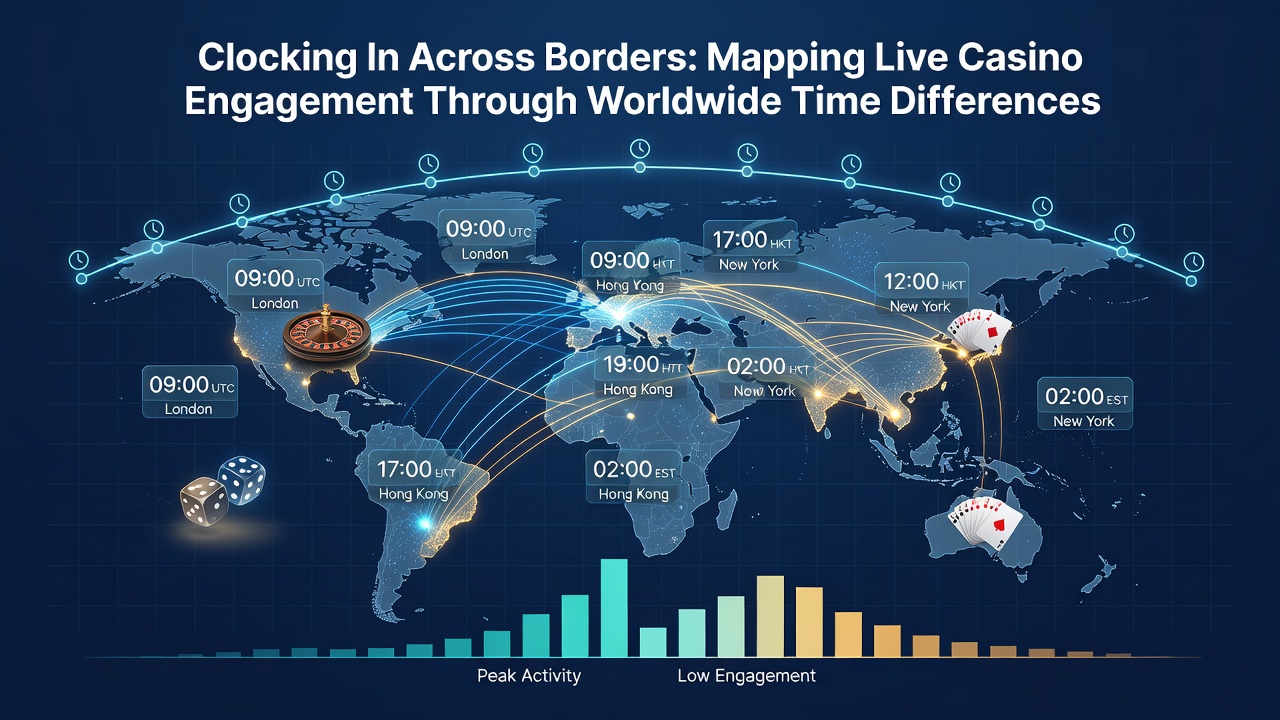
Live casino platforms operate around the clock yet player participation follows distinct rhythms shaped by time zones and daily routines. Data collected through 2026 shows engagement spikes align with evening hours in major markets while quieter periods emerge in others, creating a shifting global map of activity. Operators track these patterns to allocate dealers and adjust game availability across regions.
Regional Activity Patterns in 2026
European markets often see peak traffic between 18:00 and 23:00 local time, according to figures from the European Gaming and Betting Association. In contrast, Asian time zones generate high volumes during early morning hours in Europe, driven by players in Japan and South Korea. North American sessions cluster around 20:00 to 01:00 Eastern Time, with secondary surges in Pacific zones two to three hours later. These offsets mean a single platform can maintain steady tables without overlap in peak demand.
Researchers at the University of Nevada Reno analyzed transaction logs from multi-jurisdiction operators and found that live blackjack tables in August 2026 experienced 34 percent higher occupancy when European and Australian time zones overlapped in the late afternoon GMT window. Roulette and baccarat followed similar trends, though baccarat tables showed stronger retention among Southeast Asian participants during their local evening slots.
Platform Adaptations to Time Shifts
Operators schedule dealer shifts based on predictive models that incorporate historical data from previous months. One major network added Mandarin-speaking dealers during European morning hours to capture Asian traffic while maintaining English tables for simultaneous Western Hemisphere sessions. This approach reduced idle table time by 22 percent compared with uniform scheduling, according to internal metrics shared with industry analysts.
Software platforms integrate real-time dashboards that display active player counts by time zone. These tools allow floor managers to open or close tables dynamically rather than relying on fixed rotations. In practice, a studio in Malta might staff extra baccarat dealers at 14:00 local time to serve Australian evening players, then transition resources to blackjack for North American arrivals six hours later.
Data from Cross-Border Studies
A 2025 report issued by the Australian Gambling Research Centre documented that live dealer sessions experienced a 41 percent increase in concurrent users when Australian Eastern Standard Time aligned with early evening in the United Kingdom. The same study noted that Canadian provinces recorded lower engagement during their local daytime hours, with activity rising sharply after 21:00 Eastern Standard Time as European morning play tapered off. These findings prompted several operators to test staggered bonus promotions timed to regional peaks rather than global campaigns.
Payment processing data further illustrates the pattern. Transactions processed through regulated networks in the European Union and Canada showed consistent daily cycles, with volume rising 28 percent during overlapping high-traffic windows. Providers adjusted settlement batches to accommodate these surges without extending processing delays.
Dealer Allocation and Studio Logistics
Studios located in Eastern Europe and the Philippines coordinate across time zones to keep tables staffed during worldwide peak periods. A facility operating under Philippine time might begin its primary shift at 07:00 local time to cover European afternoon demand, then extend hours for North American evening sessions. This rotation model supports continuous coverage while limiting individual dealer fatigue.
Training programs now incorporate modules on cultural timing preferences. Dealers learn to recognize greeting patterns and betting tempos that differ by region, allowing smoother transitions when tables switch languages or game speeds mid-session. Observers note that these adjustments correlate with improved session duration metrics across multiple platforms.
August 2026 data from North American regulatory filings indicated that live casino handle grew 17 percent year-over-year during periods when Asian and European time zones overlapped with U.S. late-night hours. Regulators in New Jersey and Pennsylvania tracked these increases through licensed operator submissions, confirming the role of synchronized global timing in revenue distribution.
Conclusion
Time zone mapping has become a core operational tool for live casino networks. Platforms that align dealer resources and promotional timing with worldwide activity cycles maintain steadier engagement across regions. Continued analysis of transaction and login data will refine these models as markets expand into additional jurisdictions.