How Cross-Jurisdictional Data Sharing Protocols Reshape Player Verification Workflows in Licensed Digital Card Rooms

Cross-jurisdictional data sharing protocols connect regulatory systems across state and national boundaries, and they alter how licensed digital card rooms conduct player verification. These protocols allow operators to exchange identity records, transaction histories, and compliance flags in real time, which reduces duplicate checks while maintaining each jurisdiction's legal standards. Data indicates that networks operating under such agreements process verification requests faster than those relying on isolated databases.
Core Mechanisms Driving the Shift
Protocols such as standardized API endpoints and encrypted ledger entries form the backbone of these exchanges. When a player registers in one licensed room, the system queries partner jurisdictions for prior activity flags before issuing a final approval. Researchers at several regulatory technology conferences note that this approach cuts average onboarding time from 48 hours to under six hours in participating networks. The same frameworks embed automated alerts when a player's status changes in any connected jurisdiction, so operators receive notifications without manual follow-up.
Implementation varies by region. Several U.S. states participating in multi-state poker compacts adopted unified data schemas in early 2026, while European operators aligned their systems under existing digital services regulations. Canadian provinces expanded similar arrangements through interprovincial agreements finalized in late 2025. Each framework requires explicit consent from players and logs every query for audit purposes.
Workflow Changes in Daily Operations
Verification teams now handle fewer standalone document reviews because shared records supply most required data points. Staff instead focus on exception cases flagged by the protocol, such as mismatched addresses or recent regulatory actions in another jurisdiction. Operators report that this division of labor reallocates roughly 30 percent of analyst hours toward risk assessment rather than data entry.
One study released by the National Conference of State Legislatures examined transaction logs from four states operating under a shared protocol and found a 22 percent drop in repeat verification requests. The reduction stems from persistent player profiles that travel with the user across platforms, eliminating the need to re-upload identification each time an account is opened in a new room.
Integration with Existing Compliance Tools
Existing AML screening software connects directly to the shared protocol layer, pulling updated watchlist status from multiple sources simultaneously. This integration replaces sequential checks that previously required separate logins to each jurisdiction's portal. Systems built on these protocols also generate unified audit trails that satisfy reporting obligations in every participating location, which simplifies the preparation of quarterly compliance filings.
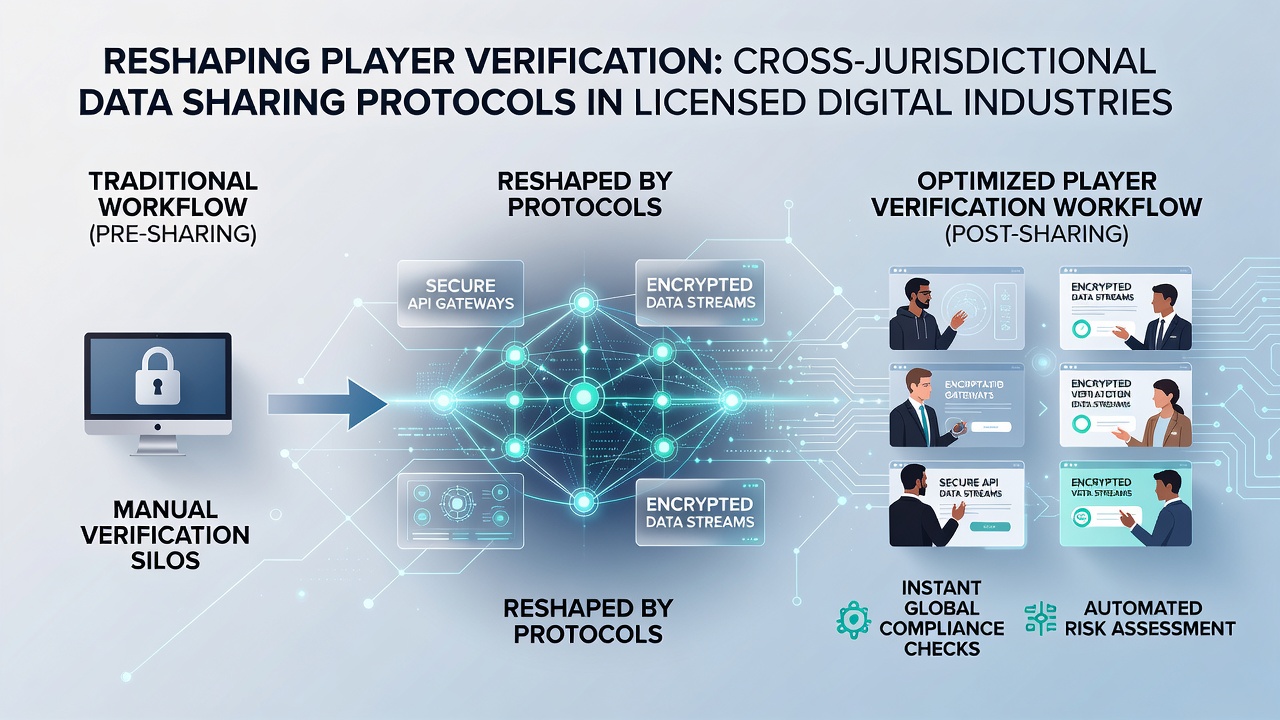
Technical standards require that all shared fields undergo format normalization before transmission, so a date-of-birth entry from one system matches the expected structure in another. Encryption keys rotate on schedules set by the overseeing regulatory bodies, and independent auditors test the integrity of each transfer on a rolling basis. These measures address concerns about data accuracy while preserving the speed advantages of real-time exchange.
Observed Outcomes Across Networks
Figures released in July 2026 by the European Gaming and Betting Association show that card rooms using cross-border protocols recorded a 17 percent decrease in account suspension events tied to incomplete verification. The same report highlights that dispute resolution times shortened because operators could retrieve complete activity histories from partner jurisdictions without additional subpoenas. In North American markets, similar patterns appear in aggregated data from state gaming commissions that track multi-state player pools.
Training programs for compliance staff have adjusted accordingly. New modules emphasize interpretation of shared data flags rather than document collection procedures, and several training providers now offer certification tracks focused on protocol-specific workflows. Those who have completed the updated courses demonstrate higher accuracy rates when reviewing edge-case alerts generated by the system.
Conclusion
Cross-jurisdictional data sharing protocols continue to standardize verification processes in licensed digital card rooms by linking previously separate regulatory databases. The resulting workflows emphasize exception handling and automated alerts while preserving each jurisdiction's oversight authority. As adoption expands through 2026, operators and regulators alike track performance metrics that measure both efficiency gains and continued compliance with local statutes.