Mapping Regulatory Divergences and Their Effects on Promotional Offerings in Licensed Digital Gaming Spaces
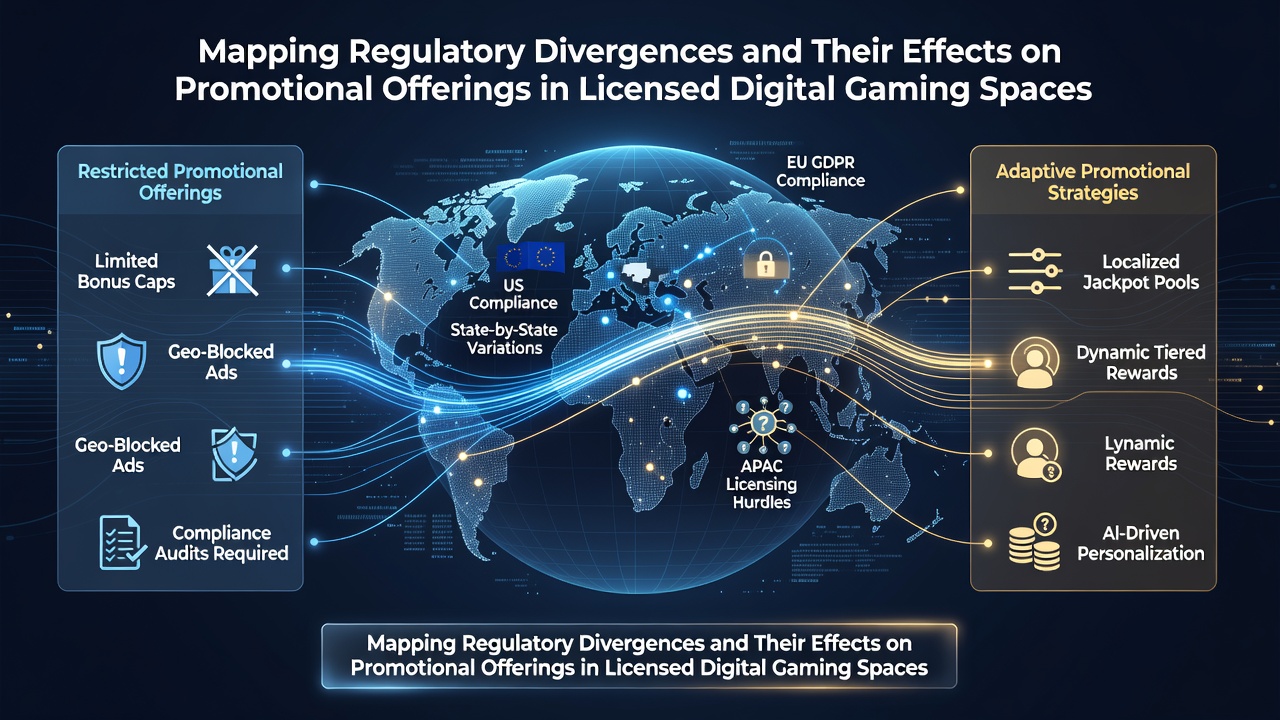 Regulatory frameworks governing licensed digital gaming spaces differ substantially across jurisdictions, and these variations directly shape the structure and availability of promotional offerings such as welcome bonuses, loyalty rewards, and deposit matches. Operators must adjust wagering requirements, eligibility criteria, and marketing language to align with each region's specific mandates, which creates a patchwork of compliance obligations that influence how promotions reach players.
Divergent Approaches in Major Markets
European jurisdictions including Malta and Sweden impose strict caps on bonus values and mandate clear disclosure of terms, whereas several Australian states permit more flexible reward structures provided they meet consumer protection thresholds set by local authorities. In North America, individual U.S. states maintain distinct standards that range from New Jersey's emphasis on responsible gaming disclosures to Nevada's focus on transaction transparency, and these differences force platforms to customize offers rather than deploy uniform campaigns globally.
Canadian provinces further illustrate the pattern, since Ontario's regulated market requires age-verification protocols before any promotional credit activates, while other regions maintain lighter touch rules that allow faster rollout of time-limited incentives. Researchers tracking these patterns note that operators often segment their bonus libraries by jurisdiction to avoid regulatory conflicts that could result in license reviews or suspended marketing activities.
Impact on Bonus Structures and Wagering Requirements
Promotional offerings frequently incorporate jurisdiction-specific wagering multipliers, and data from regulatory filings show that multipliers range from 20x in certain European markets to 35x in selected U.S. states where higher thresholds support local revenue targets. Eligibility rules also diverge, with some regulators prohibiting bonuses for players who have self-excluded while others allow reactivation after a defined cooling period, which alters how loyalty programs retain users across borders.
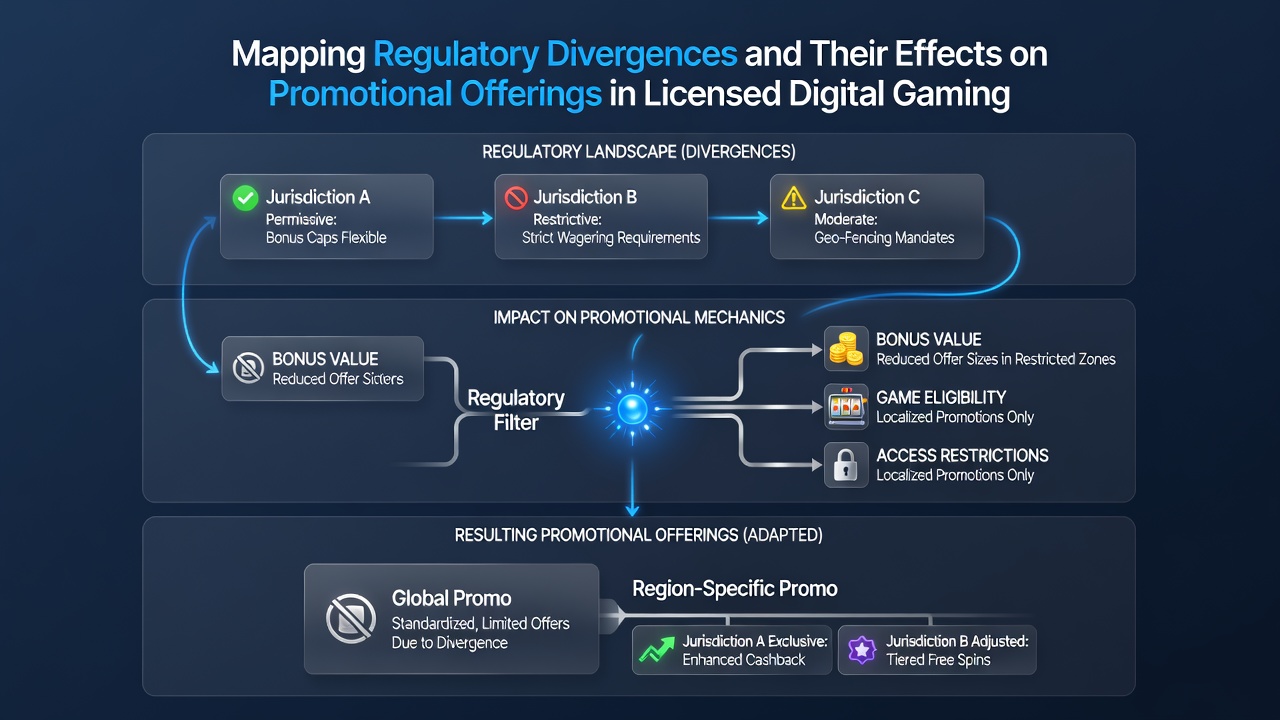
Deposit match percentages likewise reflect local constraints, and industry reports indicate that markets with tighter advertising restrictions tend to favor smaller percentage matches paired with extended validity periods to maintain player engagement without triggering review. Those who've examined operator filings observe that platforms routinely maintain parallel promotion engines, each calibrated to satisfy the most restrictive rule in its target region, which adds operational overhead but preserves market access.
Advertising and Consumer Protection Mandates
Rules governing how promotions appear in digital channels vary widely, and regulators in Asia-Pacific markets often require prominent risk warnings alongside every bonus advertisement while North American jurisdictions prioritize clear opt-in mechanisms before targeted messaging activates. These mandates affect creative execution because operators must rewrite copy and redesign landing pages for each territory rather than reuse standardized assets.
Studies conducted by academic centers focused on gaming policy reveal that jurisdictions enforcing mandatory cooling-off periods between bonus claims experience lower repeat redemption rates, whereas regions allowing consecutive offers see higher engagement metrics provided the underlying terms remain transparent. Operators respond by building modular systems that automatically apply the appropriate restrictions based on user location data detected at login.
Operational Adjustments Through June 2026
Through the first half of 2026, several markets updated their promotional guidelines in response to sustained digital growth, and these updates include revised disclosure timelines in select European countries alongside new audit requirements for bonus payout reporting in certain U.S. states. Operators have adapted by expanding compliance teams and integrating automated rule-checking tools that flag potential violations before campaigns launch.
International coordination efforts remain limited, which leaves room for continued divergence as new jurisdictions finalize licensing regimes. Trade associations representing gaming operators have published comparative matrices that help members track evolving standards, and these resources highlight how promotional calendars must shift when regulators introduce seasonal restrictions or temporary caps on reward values.
Conclusion
The mapping of regulatory divergences demonstrates that promotional offerings in licensed digital gaming spaces function as jurisdiction-specific products rather than universal features, and operators that invest in flexible compliance infrastructure maintain broader market reach while reducing exposure to enforcement actions. Data collected through mid-2026 confirms that continued fragmentation will require ongoing system updates and localized strategy development to keep offerings both attractive and lawful across regions.