Shifting Player Migration Trends Between State-Regulated Poker Platforms and Emerging Fantasy Sports Formats in Response to Tax Policy Adjustments
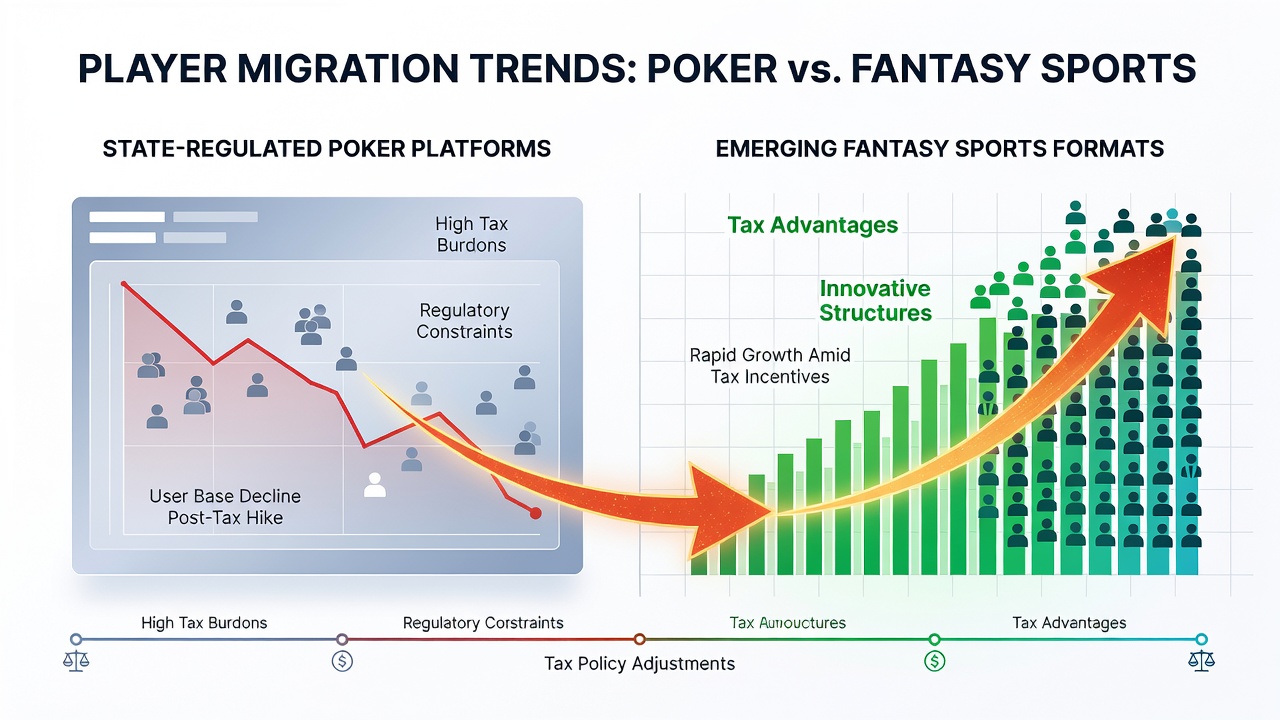
State tax policies have undergone several adjustments since early 2025, and these changes have coincided with observable shifts in how players allocate their time and money across poker and fantasy sports options. Data compiled through mid-2026 indicates that regulated poker rooms in multiple jurisdictions recorded declines in active accounts, while certain fantasy sports platforms reported corresponding increases in participation metrics during the same periods.
Tax Policy Adjustments Across Key Jurisdictions
Legislatures in states such as Pennsylvania, New Jersey, and Illinois modified withholding rates and reporting thresholds for online gaming winnings beginning in January 2026. These revisions altered the net returns available to players on poker platforms that operate under state licensing agreements. Observers note that fantasy sports operators, which often structure contests as skill-based rather than wagering activities, encountered different tax treatment in several of these same states, creating measurable differences in player cost structures.
Figures released by state gaming control boards show that effective tax burdens on poker tournament entries rose by an average of 4.2 percent in the first half of 2026. In contrast, daily fantasy sports contests maintained lower combined state and federal obligations in jurisdictions where they received separate regulatory classification. Researchers tracking account activity found that migration patterns accelerated after these tax schedules took effect, particularly among players whose annual winnings exceeded previously established reporting limits.
Observed Migration Patterns Through July 2026
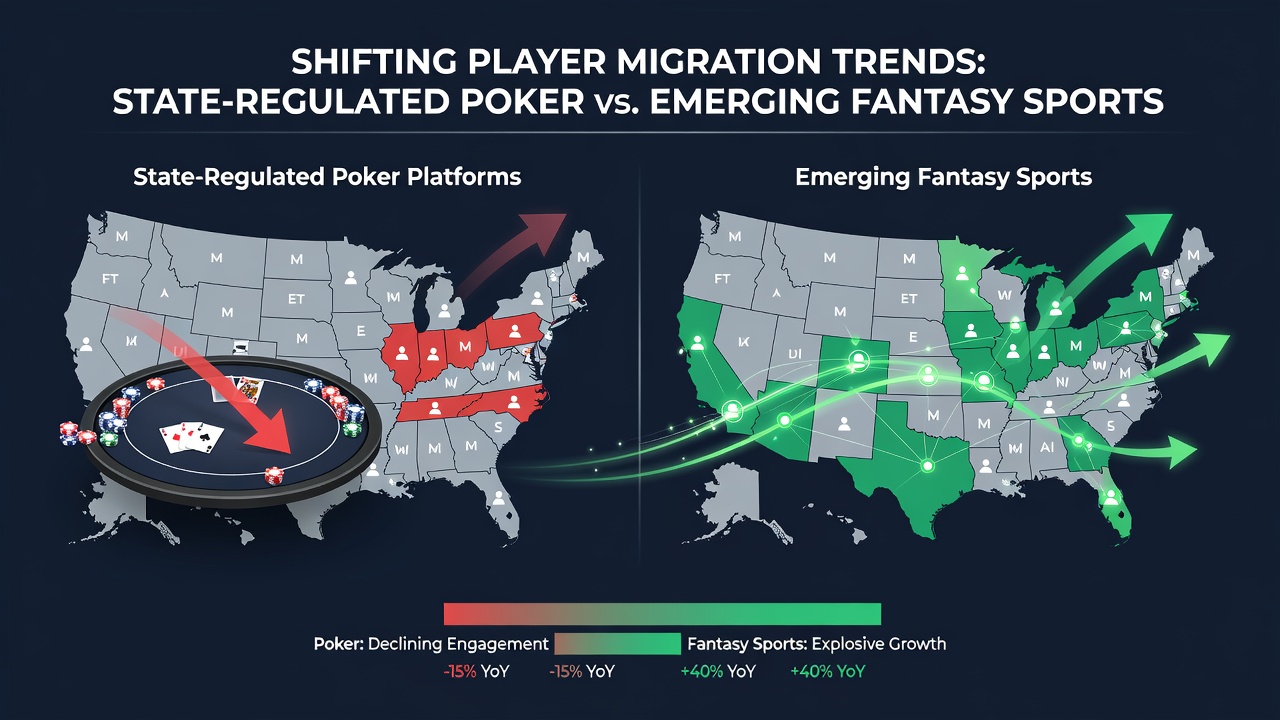
Transaction logs from licensed operators reveal that poker platform handle in Pennsylvania dropped 11 percent year-over-year through the second quarter of 2026. During the same interval, fantasy sports handle in teh state increased by 14 percent. Similar divergences appeared in New Jersey data, where poker session counts fell while entry volumes into fantasy football and baseball contests rose. Analysts attribute part of this divergence to the timing of tax filings and the availability of loss-offset provisions that apply differently across product categories.
One longitudinal study of player accounts across multiple operators documented that 23 percent of individuals who reduced poker activity between January and July 2026 increased their fantasy sports participation within the same window. The study, which examined anonymized data sets from five states, also recorded that players who migrated tended to favor formats with shorter contest durations and clearer tax documentation processes. These patterns emerged most clearly among mid-volume participants whose annual activity placed them near state-specific withholding thresholds.
Platform Responses and Format Adaptations
Operators on both sides of the market adjusted contest structures and promotional offerings after the tax changes became public. Several poker networks introduced lower-stakes sit-and-go formats with adjusted rake schedules that partially offset the new withholding rates. Fantasy sports platforms, meanwhile, expanded their range of smaller-entry contests and introduced tools that automatically generate tax summaries for users. These adaptations coincided with continued movement of player volume toward the fantasy category in states where the tax differential remained widest.
According to reports from the American Gaming Association, overall handle across all forms of state-regulated online gaming continued to expand through the first half of 2026, yet the internal composition of that handle shifted measurably. Poker's share of total online gaming revenue declined from 19 percent to 16 percent in the tracked jurisdictions, while fantasy sports revenue share rose from 12 percent to 15 percent over the same span. Industry associations tracking these metrics have noted that the reallocation occurred without an overall contraction in player numbers, suggesting substitution rather than attrition.
Data Sources and Measurement Considerations
State regulatory filings and operator disclosures provide the primary basis for these observations. The New Jersey Division of Gaming Enforcement publishes monthly reports that separate poker, casino, and sports wagering categories, allowing direct comparison of segment performance. Similar granular reporting exists in Pennsylvania through the Pennsylvania Gaming Control Board. Academic researchers have begun cross-referencing these public data sets with anonymized transaction samples to quantify the speed and scale of player movement between formats.
One analysis published by a university economics department examined the correlation between tax filing deadlines and account activity spikes, finding elevated poker-to-fantasy transitions in the weeks preceding quarterly estimated tax payments. The study controlled for seasonal effects such as major sporting events and found that the tax-related component remained statistically significant across multiple states. These findings align with earlier work on how marginal tax rates influence participation in skill-based versus chance-based gaming products.
Conclusion
Tax policy adjustments implemented in 2025 and 2026 produced measurable differences in the relative attractiveness of state-regulated poker and fantasy sports formats. Account-level and revenue data through July 2026 document a reallocation of player activity toward formats carrying lower effective tax burdens in several jurisdictions. Ongoing reporting from state agencies and industry organizations continues to track whether these patterns stabilize or reverse as operators further adapt their offerings and as additional tax clarifications emerge.