Wagering Requirements Exposed: The Math Making or Breaking Casino Bonuses
What Exactly Are Wagering Requirements?
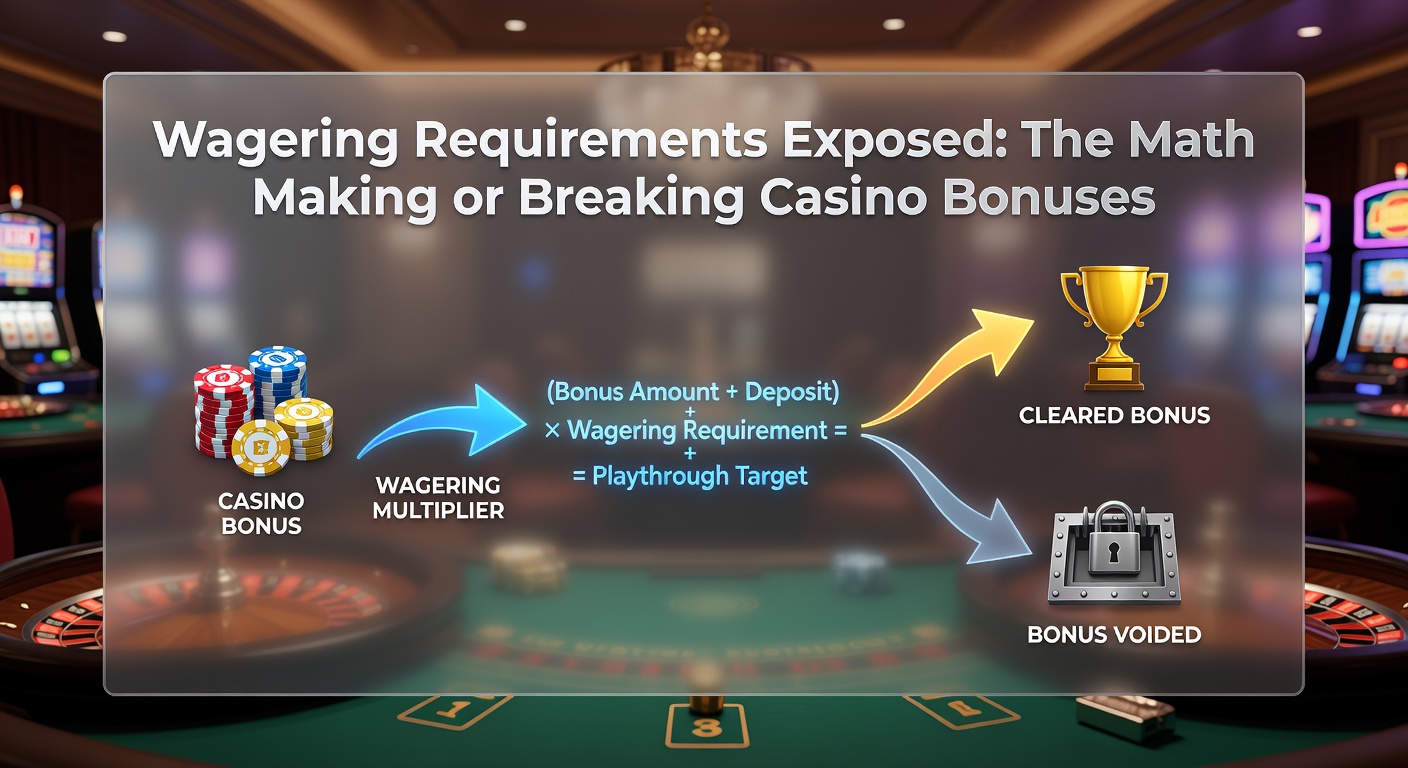
Online casinos dangle bonuses like welcome offers or free spins to draw players in, yet those shiny deals come wrapped in wagering requirements that dictate how much real money action someone must generate before cashing out winnings. Researchers define these requirements as the total amount a player needs to bet, often expressed as a multiple of the bonus amount received, say 30 times the bonus or even the deposit plus bonus combined; this setup ensures casinos recoup promotional costs through sustained play. Data from industry trackers reveals most bonuses carry multipliers between 20x and 50x, although some no-wager promotions exist in regulated markets where players withdraw freely after meeting minimal conditions.
Turns out, the fine print matters hugely because wagering requirements separate casual fun from potential profit; experts who analyze casino terms note that misunderstanding them leads thousands to forfeit winnings annually. And while platforms phrase it simply like "35x on slots," the reality involves game-specific contributions where blackjack might count just 10% toward progress, forcing longer sessions on higher-house-edge games.
Breaking Down the Core Math: From Bonus to Bet Volume
Consider a typical scenario where a player deposits $100 and grabs a 100% match bonus, landing $200 to play with; at a 30x wagering requirement on the bonus alone, that translates to $6,000 in total bets before withdrawals unlock, a figure that climbs to $9,000 if the rule covers deposit plus bonus. Studies from gaming mathematicians show this multiplier directly ties to the casino's risk model, calibrated so expected house edge over those bets offsets the free money given; for slots with 96% RTP, house edge sits at 4%, meaning $6,000 wagered yields about $240 in statistical losses, roughly balancing a modest bonus.
But here's the thing: calculations get trickier with contribution rates, as slots often contribute 100% while video poker or roulette chips in at 20% or less; one researcher crunched numbers on a $500 bonus with 40x req and found table games barely dent the total, stretching clearance to weeks of grinding. Figures from American Gaming Association reports highlight how U.S. operators in states like New Jersey enforce these rigidly, with audits ensuring compliance.
What's interesting is the break-even threshold, where wagering volume divided by RTP reveals viability; if RTP averages 95%, a 20x req on a $100 bonus demands $2,000 wagered but expects $100 lost to the house, making it neutral at best, yet higher multipliers tip scales heavily against players. Observers point out progressive jackpots or high-volatility slots amplify variance, sometimes allowing lucky runs to clear reqs early while average sessions drag on indefinitely.
How Wagering Requirements Make or Break Bonus Value
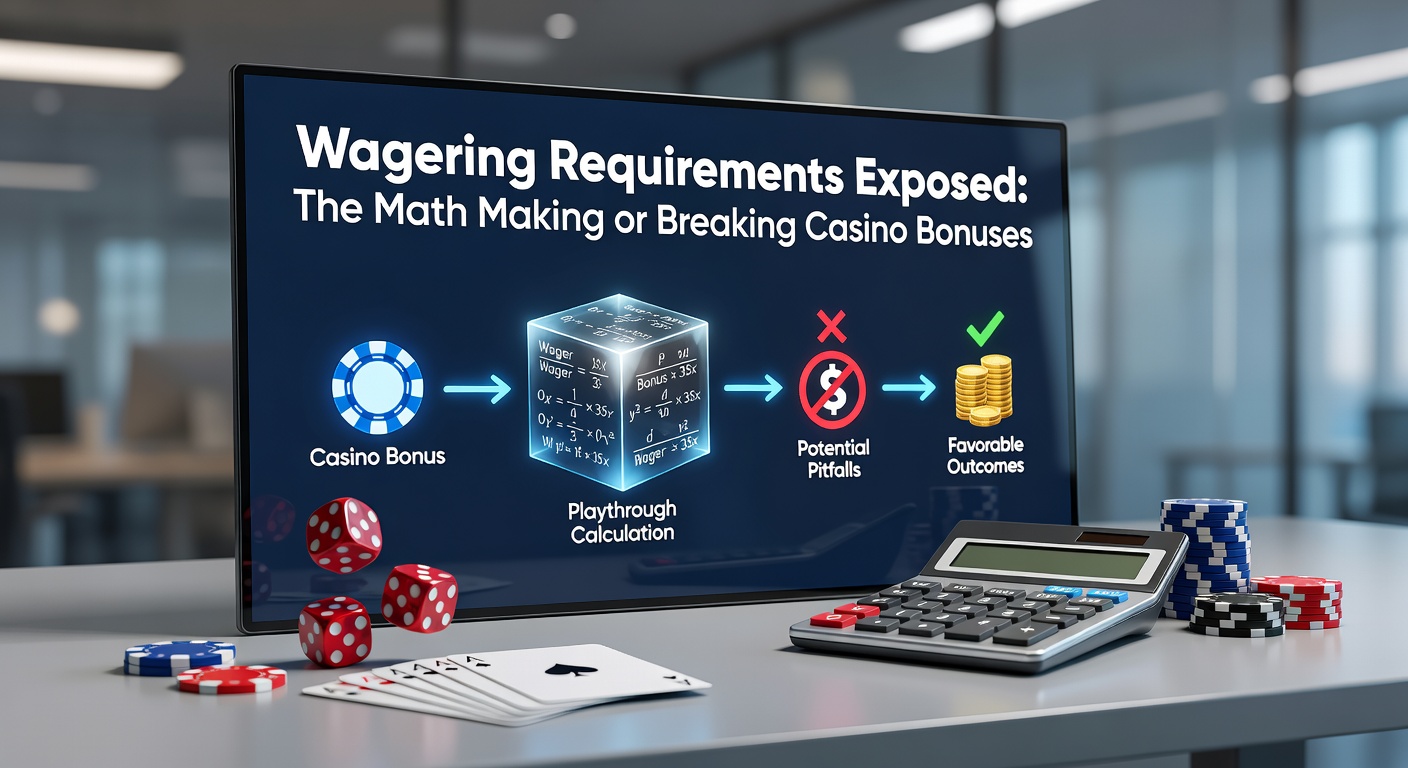
Low requirements around 15x-25x transform bonuses into player-friendly tools, especially paired with high-RTP games; data indicates these deals yield positive expected value in about 10% of cases due to variance, as one study from Australian researchers detailed how a 20x req on 98% RTP blackjack edges toward profitability over thousands of hands. Yet steep 50x-plus demands break most bonuses, with effective value dropping below 20% of face amount after house edge deductions; that's where the math turns punishing, locking funds until improbable win streaks occur.
And consider max bet caps, often $5 per spin during bonus play, which slow progress on high-denomination slots; combined with time limits like 30 days, these clauses force strategic choices, as missing deadlines voids everything. People who've modeled this in simulations discover cashback bonuses fare better since lower reqs (10x-15x) align with slimmer margins, turning potential losses into recoverable plays.
Game Contributions and Hidden Multipliers: The Real Game-Changers
Not all bets count equally, with casinos assigning weights like 100% for slots, 50% for video poker, and 10% for craps; this skews strategy toward qualifying games, where a $10 blackjack bet might add just $1 to progress, prolonging the grind exponentially. Research from Australia's ACMA underscores how such structures protect operators Down Under, noting average clearance times stretch to 40 hours for $1,000 bonuses under mixed-game play.
So, players chasing clearance target slots' full contribution, but volatility bites back; low-volatility titles clear steadily with smaller banks, whereas high-vol ones risk busting before completion. Experts observe bonus buy features in modern slots complicate math further, as purchases often exclude from wagering, funneling action to base games only.
Regional Variations and Regulatory Shifts as of May 2026
Regulations shape requirements globally, with Ontario's iGaming market capping them at 30x since 2023 expansions, a move data shows boosted player retention by 15%; as of May 2026, similar caps emerge in emerging U.S. states like Ohio, where operators must disclose effective RTP impacts upfront. In contrast, unregulated offshore sites push 60x norms, drawing scrutiny from watchdogs; Canadian provincial bodies enforce transparency, mandating calculators on promo pages for real-time progress tracking.
Europe's Malta Gaming Authority pushes fairer terms, with audits revealing 25x averages across licensees, while Australia's strict bans on inducements limit bonuses altogether, shifting focus to loyalty programs sans heavy reqs. Those tracking trends note May 2026 brings AI-driven tools from platforms, simulating clearance odds based on playstyle, helping users spot value before depositing.
Case in point: one Ontario player in early 2026 cleared a 25x $200 bonus via low-edge baccarat variants contributing 20%, netting $450 profit after 45 hours; such stories surface in forums, but stats show only 5-8% achieve similar without reloads.
Advanced Math: Expected Value and Variance in Action
Delve deeper, and expected value (EV) formulas expose truths: EV = (Bonus Amount * RTP) - (Wagering Req * House Edge), often negative unless RTP exceeds 100% in rare promos; for a 40x $300 bonus at 96.5% RTP, EV calculates to -$42, meaning long-term losses despite short-term wins. Variance adds thrill, with standard deviation models predicting 70% failure rates under 50x reqs, yet 1-in-20 outliers cash big.
Now, free spin bonuses flip scripts slightly, wagering winnings only (say 35x $50 haul = $1,750), slashing volume; coupled with no-deposit offers, these test waters cheaply, although caps like $100 max cashout limit upside. Observers who've reverse-engineered terms find stacking multiple bonuses multiplies reqs additively, overwhelming all but high-rollers.
Conclusion: Mastering the Numbers for Smarter Play
Wagering requirements boil down to probability and edge, where math-savvy players pick low-multiplier deals on high-RTP qualifiers to maximize returns; data across markets confirms informed choices turn average bonuses into edge-worthy opportunities, even as casinos evolve terms quarterly. As May 2026 unfolds with tighter disclosures in places like Ontario and Ohio, the landscape favors transparency, letting numbers guide decisions over hype. Ultimately, those who crunch the figures navigate bonuses effectively, turning potential pitfalls into calculated plays.